By John Adair
•
July 1, 2026
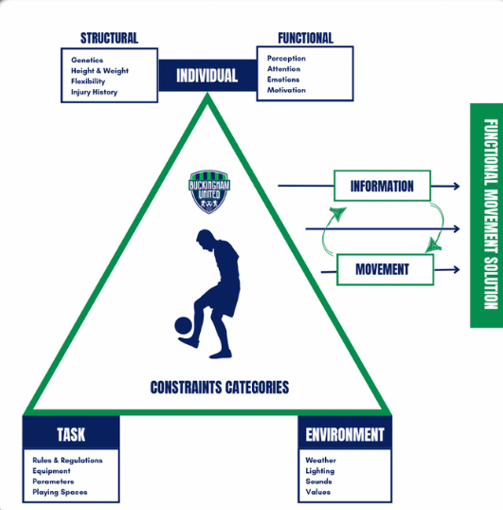
Happy July! I hope this email finds everyone well and enjoying their summer thus far. As per usual, I wanted to take this opportunity to provide everyone with an update as well as important reminders. Etrainu Learning Platform Last week, we launched our brand new eLearning platform in collaboration with etrainu. Thank you to all of those that have already logged in and taken the Parent Onboarding course! We are extremely excited about the impact of what this platform will provide our club at every level - from parent onboarding to coaching education and even player clarity and understanding. As the we progress into and throughout the season, we will continue to add courses that will hopefully be valuable for everyone within the club. If you haven’t already, please be sure to log in and take the course assigned to you. We are asking that a parent of each player do so prior to the start of training in August. We fully understand that many families are on vacation and we do not want to interrupt those cherished memories so whenever you have free time at home, it will not take up much of your time. If you have any feedback, suggestions, or questions regarding the platform at any point, please do not hesitate to let me know. Coaching Education While the players are enjoying a well deserved break, our coaches continue to be hard at work improving their craft to provide the best possible experience for the players in their care. On the formal side of coaching education, we are excited to announce that many of our coaches have recently earned or are in the process of earning new coaching licenses. Jalen Weatherspoon just recently earned his USSF C License while Alexis Moon , Giuseppe D’Alterio , and Zach Miller are currently wrapping up their USSF D License. Mike Fraioli is preparing to start his USSF C License while Michael Price is nearing the beginning of his USSF B License journey. We’re incredibly proud to have so many of our coaches dedicated to their own development as coaches which will only improve the learning environments that we all create for players. Internally, our coaching staff spent last month going over Planning & Periodization for the upcoming season. This process has coaches lay out in advance what an ideal season may look like in regards to goals, key performance indicators, and ensuring that the training sessions planned actually connect to those as well as our game model (how we want to play) to make sure that learning truly takes place through an aligned, intentional, and thoughtful planning process. In our last coaching education session, we went over the process with all of the coaches and since then, we’ve been meeting with coaches individually to support them through the process of planning for each of their teams. In July, our coaching education in preparation for the season will go deeper into our training methodology, which I’ll provide an overview for in a bit. The reasoning for this is to ensure that all of our coaches understand how we design effective training sessions that transfer to the games on the weekend and become embedded in players’ long-term memory. Additionally, this provides consistency in the training environment regardless of the team or age. Our Training Methodology Many of you have likely heard us speak about this before, but it is critically important to reiterate to ensure everyone knows what to expect when we hit the fields in August. Just as importantly, we want everyone to understand why we train in the manner that we do. It is important to us as a club to make sure that we are constantly up to date with the most modern trends and information when it comes to making decisions. Our training methodology, also known as a Constraints-Led Approach (or CLA for short) is based in evidence. This means that it is underpinned by academic research, professional experience and experience, as well as the players’ needs. If you want to learn more about the research that supports our approach, you can find some of that and more on our website at the link below. www.buckinghamutd.com/coaching In short, it is about recognizing that every individual is different and perceives themselves and their situation differently. It also acknowledges that with that in mind, developing players should not be treated like a factory or mechanical in nature. Research shows us that the concept of muscle memory in dynamic sports such as soccer does not stand up to the test. Training “technique” in isolation with the goal of minimizing the amount of variability in how players pass, dribble, or strike a ball is counterproductive to learning the game. This isn’t to say that there is no value in it. There is something to be said for the confidence that it may provide or the “sharpening” of qualities that players may already possess, but in a learning context, it provides very little. Instead, learning environments should revolve around the individual and how they interact with all of the different constraints at hand. Constraints can be grouped into three categories: The Task: In simple terms, what is the goal and what are the rules and conditions that must be adhered to in order to achieve the goal? For our context, the task is scoring a goal or regaining the ball after we’ve lost it and the other factors would be the rules of the game. The Environment: The environment involves things within our control as well as things outside of our control. Factors such as a wet or muddy field, loud and controlling coaches or parents, and time of day are all factors that play a role in how we perceive things. The Individual: This one goes without saying. Every player is unique, from their genetics and physical maturation to their motivation and attention. Factors such as injury history are also important considerations. All of these factors dictate how players respond and the solutions that they attempt, not some pre-determined action or pattern. The most important thing to consider, however, is that even knowing all of this, what guides the decision-making process for players is their perception. As a coach or parent, we may and very likely will perceive the same situation differently than a player given our different vantage points, experience, and other factors. This in and of itself makes command or joystick-style coaching ineffective. Often times, too much time is spent focusing on “how” to do things rather than the where, when, and why which makes learning “stickier” and makes performance more repeatable. With all of this in mind, our Constraints-Led Approach revolves around a few key pillars in application: Perception & Action Coupling: This means that we avoid taking away important context that guides player decision-making. Dribbling through cones may help players with the “how” but does nothing to help them learn the when, where, and why - which again, is not universal but unique to them and their perceived capabilities. Repetition WITHOUT repetition: Training isn’t repetitive in nature because the game isn’t. Limiting variability in actions is not the goal of training as every pass, dribble, or shot will be different. Additionally, the game flows between different phases - attacking, defending, and transition. Eliminating those from training to focus on one explicitly takes away opportunities from players to learn implicitly. Self-Determination Theory: SDT tells us that all of us as humans have three needs to feel and be our best. Those three needs are autonomy, competence, and relatedness. Research shows that players that receive autonomy-supportive coaching play sports longer, perform at higher levels, and live happier lives. There is data to support that the longer a youth athlete stays in sport, the higher likelihood that they will hold leadership positions in their career beyond the sport so regardless of outcomes on the field, this is an important priority for us as coaches. Reminders Just a few reminders to wrap this up: If you haven’t already, please be sure to order your uniforms. Nearly everyone has but just a gentle reminder to anyone that hasn’t. For those new to the club and/or travel soccer, Zach Miller will be reaching out with instructions on how to take care of your requirements in GotSport. This is necessary to be approved for any league roster and only needs to be done once. It will not have to be repeated in the future. Please complete the Family Experience Survey in PlayMetrics and Parent Onboarding Course in etrainu if you have not already done so. Many of you have done both already and it is greatly appreciated! These are not to put more on your already long to-do lists but to ensure that we can provide you and everyone with the best possible experience. Summer camps are still taking place every week with a different theme. If your child is enjoying the World Cup as much as we are, we’d love to see them at camp. Feel free to view the remaining schedule and register here: www.buckinghamutd.com/summercamps Lastly, we have put together a schedule of tentative preseason friendlies with Warrington and MonU. I am waiting on confirmation from those clubs that the schedule proposed works for them and as soon as I have that, we will get those into PlayMetrics so everyone has them in their calendar. We greatly appreciate your support and allowing us to be a part of your child’s journey. We hope that these types of communication provide clarity and transparency that can help create a great experience for everyone involved. As always, if you have any questions whatsoever, please don’t hesitate to let us know!